Hany’s Daily Hospitality Dose
← HomeHANY’S PERSPECTIVE · EGYPT

Special series · Questions for ourselves

Questions About Egyptian Tourism

Three honest questions about Egypt’s future as a tourism destination: how do we treat visitors, how do we welcome them, and do we know how to tell our story to the world? The original series was written in my Egyptian Sharqia dialect for fellow Egyptians.

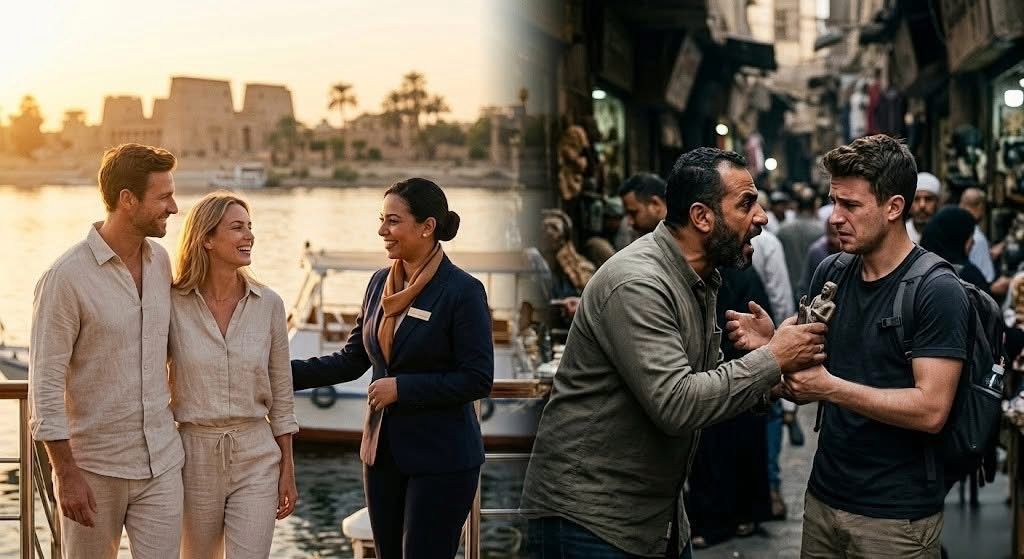
تجربتان مختلفتان للسائح في مصر
Question one

Do we welcome tourists to Egypt… or make their lives miserable?

Let’s speak honestly. I am writing in my Egyptian Sharqia dialect because these words are addressed to fellow Egyptians.

Egypt does not need more promotional campaigns. It needs us to reconsider how we treat tourists.

The truth is simple: tourists are not judging how magnificent the pyramids are. They notice how we treat them while they are there.

We may have the world’s greatest civilization and attractions, but one incident—poor treatment by one person—can ruin the entire experience.

  • Persistent demands and appeals for sympathy.
  • Inflating prices and calling it cleverness.
  • Treating the tourist as an opportunity rather than a guest.
  • Verbal and physical harassment, laughed off as something acceptable in their culture.

These are not small details. They are the experience itself.

We talk a lot about developing tourism, but very little about improving our behavior.

Here is the real difference: you can provide service without providing hospitality. Tourists notice and feel the difference immediately.

At every interaction—with a driver, vendor, receptionist, or security officer—someone represents all of Egypt, whether they realize it or not.

The serious question is: do we understand that?

Developing tourism does not begin at the airport or hotel. It begins with how we see the tourist.

Do we see a guest, or a chance to make quick money? Our answer will shape the future of tourism in Egypt.

I am not talking about perfection. I am talking about awareness. The greatest threat to tourism is not too few visitors, but a lack of respect in how we treat them.

Tourism does not begin with the state. It begins with you and me.

If you visited Egypt as a tourist, would our treatment make you want to return?
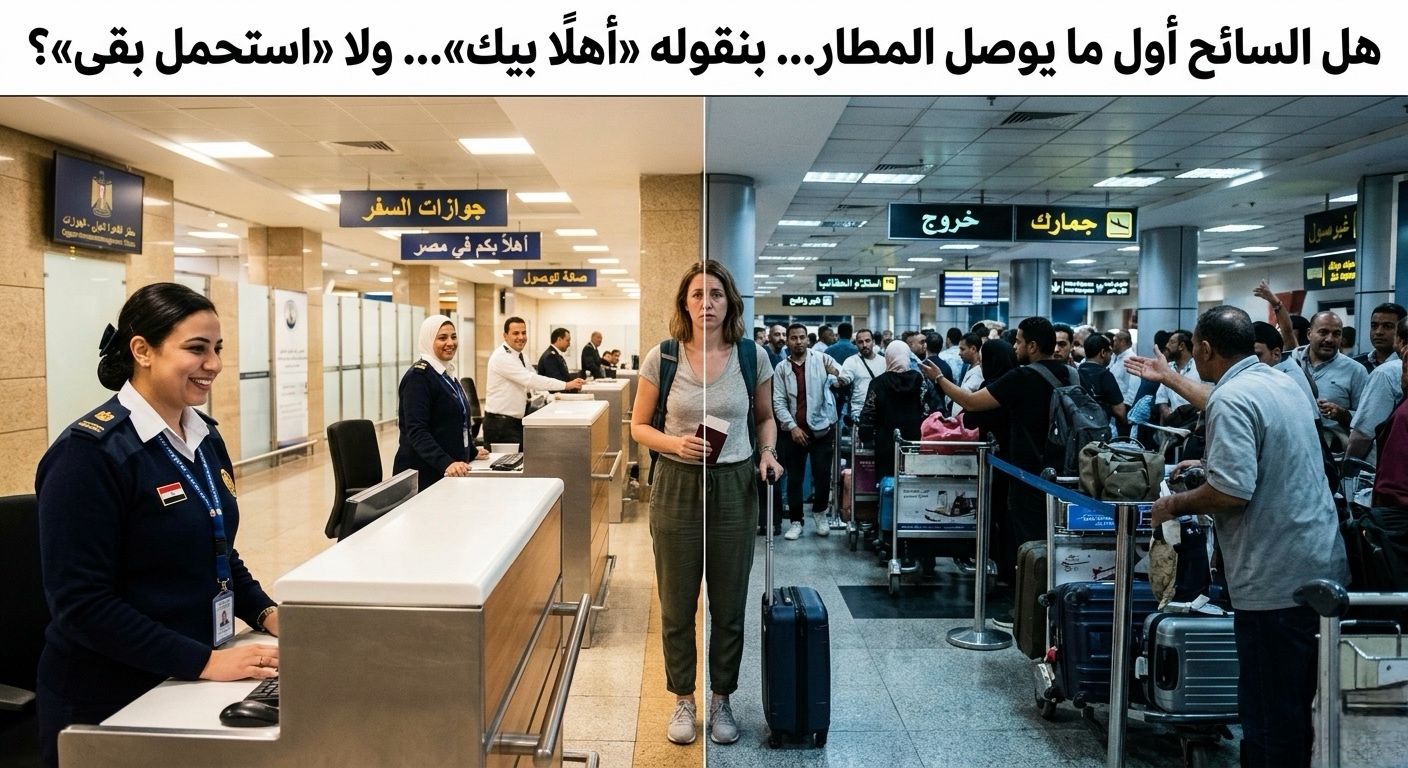
مقارنة بين استقبال منظم وازدحام في المطار
Question two

When a tourist lands at the airport, do we say ‘Welcome’… or ‘Just put up with it’?

Let’s continue with a few questions… bear with me. 😅

Let’s agree: the first impression of a country is not formed at its hotels or landmarks. It is formed at the airport.

Our airport technology may still be limited, and that is understandable.

A tourist does not need electronic gates or iris scanning to check in. They are looking for a simple feeling: being welcome.

The question is: does that actually happen?

Does everyone at the counter, passport control, or exit gate understand that they represent Egypt? Whatever their role, they are shaping a person’s experience, not merely doing a job.

Let’s ask ourselves clearly:

  • Does every employee receive real training in service culture?
  • Does the overall appearance reflect professionalism and our country’s identity?
  • Is there a clear system for managing movement, or is everyone improvising?
  • Can tourists easily get internet access at the airport?
  • Can they find their way without confusion or asking five times?

These are essentials, not luxuries. But do we even see them that way?

The problem is not that you cannot do it. The real problem is believing it does not matter.

We do not need technology to be organized or huge budgets to be respectful. We need to change how we look at the issue.

To be practical, rather than only critical:

  • Service culture training should be mandatory for everyone, from managers to junior employees, including police officers.
  • A clear program should improve appearance and uniforms to reflect identity and professionalism.
  • Basic facilities deserve real attention. Development is about the whole experience, not just appearance.

What needs to change at the airport? What simple improvement would make a difference? 😊

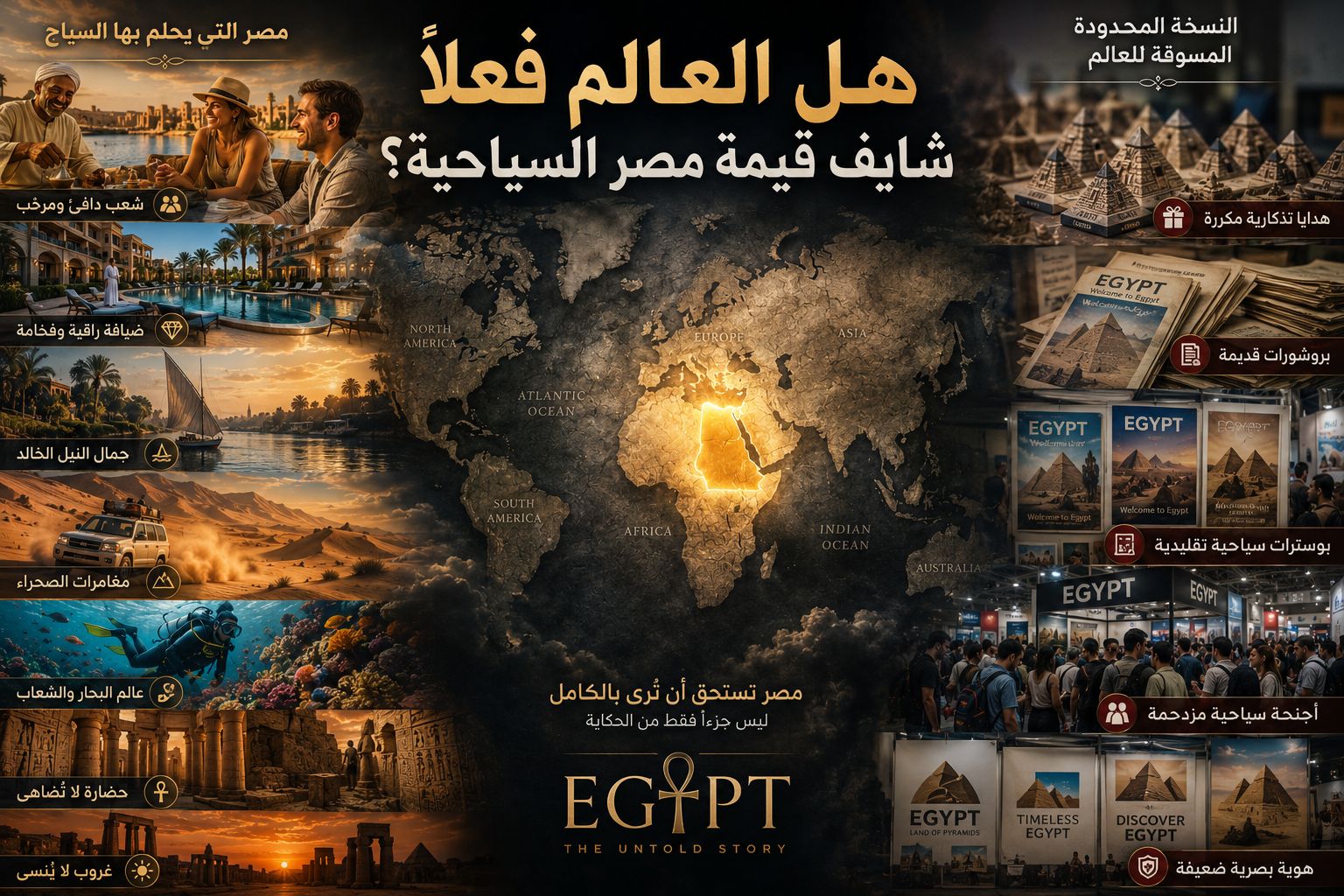
قيمة مصر السياحية وطريقة تسويقها للعالم
Question three

Does the world truly see Egypt’s tourism value? 🇪🇬

Let me say something that may upset some people: Egypt has the tourism assets to be one of the world’s leading destinations.

But does the world see that, or have we failed to present the image it deserves?

The world no longer waits to discover you. You have to reach it.

Once, civilization could speak for itself. Today, a product that is not marketed is forgotten.

Look at countries with less history, nature, and resources that are excellent at building their image.

Rwanda put ‘Visit Rwanda’ on Arsenal F.C. shirts, and suddenly millions of people were asking what Rwanda was.

That shows that tourism marketing is no longer just brochures and photographs of monuments. It is about attracting attention.

Other countries use international athletes, actors, influencers, and national airlines to sell a feeling before they sell a place.

Meanwhile, we sometimes still treat tourism marketing as an exhibition stand, brochures, and employees wearing formal smiles for a few days.

How have we used Mohamed Salah’s popularity to promote tourism?

Egypt has extraordinary tourism diversity, yet many people abroad—and even at home—do not know about it.

People imagine Egypt as only camels and pyramids. Yet it offers world-class beaches, diving, safaris, wellness, cultural, religious, sports, entertainment, and ecological tourism. Each could support an entire economy.

The problem is not a lack of assets. It is that we are not telling our story properly.

We must also understand that EgyptAir is more than an airline. It is part of Egypt’s international image.

The aircraft is an advertisement. So are the service, uniforms, and welcome. The journey itself is part of the tourism experience.

Tourism today means market analysis, content creation, sports partnerships, digital marketing, thoughtful use of influencers and stars, and understanding how to make the world dream of visiting Egypt.

The painful truth is that the world often does not undervalue Egypt. We market it for less than it is worth.